Resources
Here you can find more information about counselling, mental health resources, other services and providers, and odds and ends I wanted to share.
Counselling Regulation and Oversight
Have you had an issue with a counsellor, or just want to know more about the code of ethics, standards, and rules governing our profession? Some helpful links:
College of Alberta Psychologists
The College of Alberta Psychologists (CAP) is the regulatory body for the profession of psychology in Alberta. As a Registered Psychologist in Alberta, I am a member of CAP. Explore the regulatory standards and codes and the concerns and complaint processes for the profession on their website.
The Northwest Territories Professional Licensing Office
The Northwest Territories Professional Licensing Office is part of the Health and Social Services branch of the Government of the Northwest Territories. As a Registered Psychologist in the NWT, I am licensed through this office. You can find the Standards of Practice for psychologists in the NWT on their site.
Other Psychological Organizations
The Canadian Psychological Association (CPA), the Psychological Association of Alberta (PAA), and the Association of Psychologists of the Northwest Territories (APNWT) also provide guidance for psychologists working in Alberta and the Northwest Territories. The PAA and APNWT provide recommendations for psychologist fees (please note, I follow the PAA recommendations because I live and work from Alberta). The CPA provides the overarching Canadian Code of Ethics for Psychologists.
Other Regulatory Bodies
Not all counsellors are Registered Psychologists (R. Psych.). For example, you may see a Registered Social Worker (RSW) or a Canadian Certified Counsellor (CCC). The Alberta College of Social Workers (ACSW) and the Northwest Territories Professional Licensing Office govern those working in social work in Alberta and the NWT respectively. CCC’s are registered with the Canadian Counselling and Psychotherapy Association. I am not licensed under or affiliated with these bodies as I am a Registered Psychologist, not CCC or Registered Social Worker.
For counsellors working in other jurisdictions (provinces, territories, or countries), check to see what their registered title is to determine what regulatory body they work under.
Other Service Providers, Counsellors, and Supports
If I am not quite the right fit for you, or you are looking for additional support, here are some other options. I am still working on developing my network in the NWT – check back for more NWT referrals soon!
Crisis Support Services
Call 9-1-1 if you are in immediate danger and need emergency response. Emergency services are not always safe or competent in mental health emergencies, but they are able to respond quickly when there is an immediate and serious risk of harm. Other crisis services, listed below, may be better suited to your needs if you are not currently in danger.
For folks anywhere in Canada:
- Call or text 9-8-8 for suicide crisis support in English or French 24/7.
- Call 2-1-1 for help finding crisis support services in your area.
- Indigenous crisis lines include the National Indian Residential School Crisis Line (available 24/7 and toll-free at 1-866-925-4419), the MMIWG Crisis Line (available 24/7 and toll-free at 1-844-413-6649), and the Hope for Wellness Crisis Line (available 24/7 and toll free at 1-855-242-3310 or by online chat).
- The Kids’ Help Phone is available 24/7 for young people in crisis by phone at 1-800-668-6868 or by text – send CONNECT to 686868.
- Shelter Safe provides a directory of women’s shelters across Canada. For other crisis shelters in your area, call 2-1-1.
- Ending Violence Association of Canada has a directory of sexual assault support services available across Canada.
- Search ‘crisis line’ and the name of your city, province, or territory in your search engine for more options.
For folks in Edmonton:
- The CMHA Edmonton Distress Line is available 24/7 by phone at 780-482-4357 (HELP). CMHA Edmonton also offers Brite Line, a 24/7 crisis line for 2SLGBTQ+ folks, available by phone at 1-844-702-7483 (BRITE).
- Access 24/7 is AHS’s single access point to mental health services, crisis intervention, and support for adults in Edmonton. They are available 24/7 by phone at 780-424-2424 or between 8AM-10PM in person at Edmonton Community Health Hub North, 13211 Fort Road NW (close to the Belvedere LRT station).
- The Crisis and Stabilization Team for Children and Youth (CAST) is available for young people in crisis aged 5-17 in Edmonton. Their hours are 8:30AM-11:30PM and can be reached by phone at 780-407-1000.
- Single-session counselling is available in person and online through Momentum Counselling or Drop-In YEG. A session is usually available within the next couple days.
Affordable Counselling Options
Counselling is expensive, especially for folks who don’t have insurance coverage, who are low-income, or who can’t afford to financially prioritize counselling for any other reason right now. While fully funded mental healthcare is needed, here are some options for accessible counselling in the current mental healthcare system.
For folks anywhere in Canada:
- Find low-cost and sliding scale counselling in your province or territory on the Affordable Therapy Network.
- Many psychology practices and agencies offer no- or low-cost counselling sessions with a student counsellor during the school year (September-April). Student counsellors are also sometimes called interns, practicum students, or mental health therapists. (For folks in Alberta, check out Summit Counselling where I work for student counsellor options during the school year.)
- Registered Social Workers (RSW) and Canadian Certified Counsellors (CCC) often have lower rates than Registered Psychologists (R. Psych.), and may offer sliding scales that extend below my reduced rate.
- Some employers offer an Employee Assistance Program (EAP) that includes access to free mental health support, often from a licensed mental health professional. These services may be in addition to or instead of insurance coverage for counselling, and are usually limited in number of sessions, scope, and therapeutic approach. You may also want to check about the limits of confidentiality when going through a program linked to your employment.
For folks in Edmonton or Alberta:
- YWCA Edmonton offers up to 20 sessions of in-person or virtual counselling at a sliding scale rate of $5-$200 per session. They focus on trauma-informed care for survivors of gender-based violence, and the BIPOC and 2SLGBTQ+ community.
- The Family Centre offers ongoing therapy in Edmonton, with the first session free and additional sessions at a sliding scale rate. They also run in-person therapy groups with sliding-scale fee options.
- Counselling Alberta offers services virtually and in person (in major cities across Alberta) for sliding scale rates.
- Rapid Access Counselling offers free virtual single-session counselling for youth and parents.
- Drop-In YEG provides free single-session counselling in person and online. Sessions are offered through different locations on different days of the week and can be booked ahead or you can just drop in.
- Momentum Counselling offers single-session and brief ongoing counselling in person and online for a sliding scale fee of $40-$200 per session. They also offer a wide range of groups and workshops for free. Their ongoing drop-in groups include the Anchor Men’s Group (offered in person and online), the Healing Trauma Support Group (offered virtually), and the Women’s Wellness Group (offered virtually).
- The Sexual Assault Centre of Edmonton offers up to 15 free session for those impacted by sexual violence, as well as provides other free services like therapy groups and police/court support.
- Access mental health support through Alberta Health Services (AHS) by requesting a referral from your doctor or calling Health Links at 8-1-1 and asking for a mental health referral. The scope and availability of mental health support may be limited, and there may be a waitlist.
For folks in the Northwest Territories:
- The Community Counselling Program offers free counselling in person (in 20 communities or fly-in) or by phone.
- Access mental health supports through NWT Health and Social Service (HSS). Call 8-1-1 to get mental health support from a Registered Nurse or request a mental health referral from your doctor. The scope and availability of mental health support may be limited, and there may be a waitlist.
Other Great Counsellors
I am passionate about helping folks get the right fit! If you are looking for a specific referral, please get in touch. I am lucky to know lots of amazing counsellors with different styles and specialties that I would love to send along. Here are a few places to start your search.
For folks anywhere in Canada:
- Psychology Today is the main directory that counsellors advertise in. Use the filters to find counsellors that fit your needs.
- Healing in Colour is a directory of anti-oppressive BIPOC counsellors and other allied professionals.
- The COVID-Conscious Therapist Directory has listings of counsellors who acknowledge the ongoing risks and impacts of COVID and offer safer services.
For folks in Edmonton or Alberta:
- Summit Counselling Services, the practice I work out of, has a wide range of counsellors offering services virtually across Alberta and in person in Edmonton, St. Albert, and Leduc.
- Nicole Perry keeps a list of some of the feminist counsellors in the Edmonton area, including polyamory-competent, Health at Every Size, and NIHB approved providers.
- BIPOC Healing Centre offers in-person and virtual therapy for racialized folks, with a focus on culturally appropriate and racially aware services from racialized service providers.
- Ignite Counselling and Wellness Services offers in-person and virtual therapy with a focus on feminist, sex-positive, Health at Every Size, and queer-competent counselling.
Beyond Counselling
Need help with something beyond the scope of counselling? Here are a few resources I know about that might be able to help. Check back for more resources in the future!
For folks anywhere in Canada:
- Call 2-1-1 for help finding a government or social service, like help with housing, info about local food banks, access to domestic violence shelters, or wayfinding for newcomers.
- Find an Indigenous Friendship Centre near you through the National Association of Friendship Centres. Friendship Centres provide a hub for services, support, and cultural connection for Indigenous people in urban settings.
For folks in Edmonton or Alberta:
- Skipping Stone offers support, programs, resources, and wayfinding for trans folks in Alberta.
My Favourite Links and Resources
Here are some general resources that I think are helpful for a wide range of folks. I am happy to provide additional or more tailored resources on these topics and others in session based on clients’ specific goals, needs, and learning styles.
Attachment
I work a lot from attachment theory. In other words, I believe that humans are taught how to relate to others, what to expect from our relationships, and how to get our socio-emotional needs met through our earliest experiences with our parents or other caregivers. As well, I see these early relationships as the foundation for how we relate to ourselves and how we learn to manage and respond to our own emotions.
But while I believe that these childhood impacts matter deeply, I also believe that we can expand on or change these early strategies so that we are better equipped for our relationships with others and with ourselves, now and in the future.
Some tools that might be helpful if attachment theory is also a fit for you:
- The Attachment Project has a self-assessment for learning more about your attachment style as well as information on different attachment styles.
- This Ideal Parent Figure Protocol guided meditation is recorded by me and adapted from the book Attachment Disturbances in Adults by Daniel P. Brown and David S. Elliott. It provides new internal attachment figures that can help fill missing attachment experiences, as well as help you get clear on what you need and long for in your relationships.
- The Secure Relationship Instagram by Julie Mananno shares insights and strategies for building secure attachment in your relationships, and making relationships work while healing attachment wounds.
- The Whole-Brain Child by Daniel Siegal is a (short) parenting book about supporting emotional development in little ones, but it provides a tonne of strategies, scripts, and goals for supporting emotional development in our own ‘inner children’ as well, with age-appropriate language depending on how far back you need to go with yourself. It can also be a great tool for filling in parenting gaps that were missing for you, so you don’t repeat them with your own children.
- I connect to the underlying thread of attachment theory that says early relationships inform our emotional and social strategies; however, formal attachment theory can be quite rigid and limiting. This article from Janae Elisabeth highlights some of problems with attachment theory and important alterations that make it more helpful.
Emotional Awareness, Tolerance, and Regulation
Emotions are an important source of information – they tell us what we like and don’t like, what we value, what to prioritize, what to move away from or to get more of. They are a crucial part of meaning-making and experiencing pleasure, as well as maintaining our safety, responding to challenges, and getting our needs met. We can’t get rid of emotions (and I would never want us to!), but we can learn how to tolerate, respond to, and regulate our emotions more effectively through emotional development.
Human beings are wired to develop our emotional capacity, skills, and wisdom through relationships, which is why counselling can be so helpful for improving emotional regulation. In addition to therapy, some tools the can help:
Tools for Building Emotional Awareness
- The How We Feel app provides an easy way to build emotional awareness and learn new tools for responding to our emotions. The app can also provide some helpful data on emotional patterns in your life.
- The classic Feelings Wheel can be a helpful, low-tech visual tool for identifying your emotions, and putting words to how you are feeling.
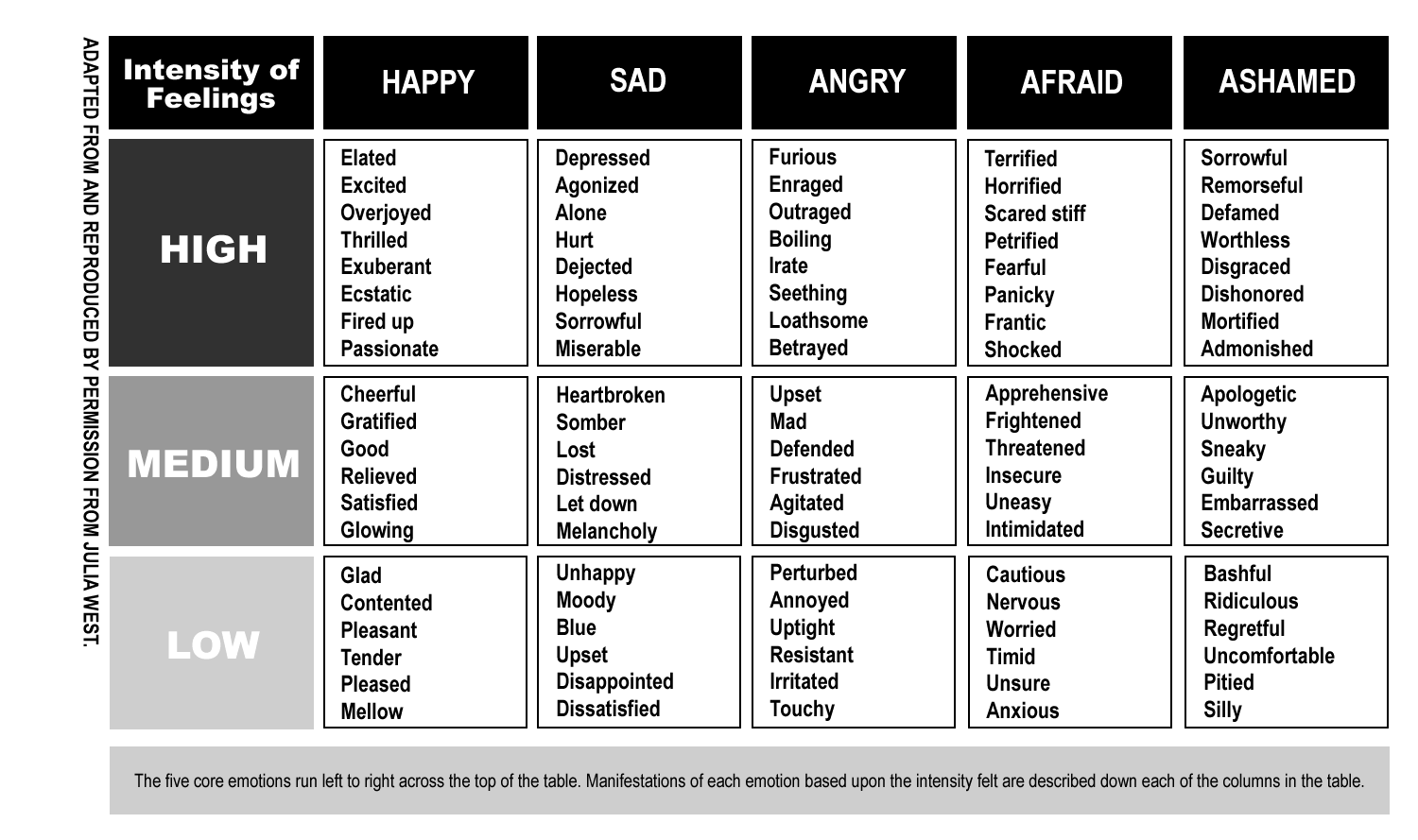
- There are some variations on the Feelings Wheel that might also be insightful. The Intensity of Feelings Chart is organized by intensity, which can be a big help for folks who are just beginning to develop emotional awareness skills. The Art of Growth Feelings Wheel is organized by feelings that either support or create tension with the common emotional goals of love, peace, and faith (or ‘hope’) – this wheel can be helpful in identifying what feelings need to be seen, expressed, and addressed in order to move closer to these goals. Lindsay Braman’s Fight, Flight, and Freeze Wheel uses body feelings to help label and identify dysregulated responses, while her Emotion Behaviour Wheel helps translate behaviours into the underlying feelings guiding them. She also has an Emotion Sensation Wheel that translates physical sensations into emotions, and a C-PTSD Symptom Wheel for identifying trauma symptoms. The Centre for Nonviolent Communication offers a Feelings Inventory divided into feelings that indicate our needs are met or not met.
- My very first counselling supervisor, Dr. Amanda Stillar, shared some educational handouts with me that help to explain emotional responses and how to meet the needs that these emotions are communicating to us. Start with her overview of emotions, then try self-compassion as a strategy for responding to your feelings. If you need more insight on how to meet specific emotional needs, review specific strategies for anger, sadness, and anxiety, or check out the cheat sheet on what need each emotion is likely communicating.
Strategies for Processing and Tolerating Emotions
- Often, simply naming and acknowledging our feelings with language is enough to begin to soothe them, but other times we need to take additional steps to make our emotions feel manageable and heard. My former supervisor, Dr. Amanda Stillar, provided me with a helpful checklist of requirements for productive emotional processing – the list can give a good idea of what is missing if an emotion seems ‘stuck’. This handout is intended for counsellors, so if you aren’t sure how to achieve all the items on the list, that is a good sign that counselling could be a helpful for you!
- Dialectical Behaviour Therapy (DBT) offers two similar strategies that use the same metaphor of an ocean wave: “riding the wave” and “urge surfing”. While “riding the wave” is for general distress tolerance, and “urge surfing” is specifically for addictions or impulsive behaviour, both metaphors remind us that feelings and impulses will not last forever, and if we can ‘ride them to their peak’, feelings will inevitably abate on their own. If you can’t quite make it to the peak of an emotion or impulse yet, practice lengthening how long you can ‘surf’ or ‘ride’ to slowly increase your tolerance. Therapist Aid offers a worksheet on this skill.
- The Whole-Brain Child by Daniel Siegal is a (short) parenting book about supporting emotional development in little ones, but it provides a tonne of strategies, scripts, and goals for supporting emotional development in our own ‘inner children’ as well, with age-appropriate language depending on how far back you need to go with yourself.
- Meditations can be a helpful tool for soothing emotions. Scroll down to the ‘Meditations’ tab on this page for some of my favourite meditations.
Frameworks for Conceptualizing Emotional Regulation
- The Window of Tolerance is a a helpful framework for understanding emotional regulation and dysregulation. The Window of Tolerance describes emotional experiences that we can stay regulated through as being within our ‘window’, while emotional experiences that dysregulate us as being outside our ‘window’. Dysregulating experiences trigger survival responses like fight, flight, and freeze. Check out Dr. Andreas Comninos’ article for an overview of the Window of Tolerance. To learn more about dysregulation in the Window of Tolerance framework, read this NICBM article. For a deeper, more clinical, dive into the Window of Tolerance and how it interacts with attachment styles, read Daniel Hill’s Affect Regulation Theory – or for a shorter summary, scroll to the Attachment and Emotional Regulation section of Dr. Andreas Comnino’s article on the topic. Kai Cheng Thom has also applied the Window of Tolerance to conflict resolution in relationships.
- Polyvagal theory offers another framework for understanding emotional regulation and dysregulation. Polyvagal theory describes two stages of dysregulation that occur when our emotional capacity is overwhelmed. According to this theory, when we begin to dysregulate, we start with fight and flight strategies, before moving into freeze strategies as dysregulation grows deeper. Polyvagal theory can be especially helpful in understanding the more intense dysregulation that can come with trauma. Check out Arianne Missimer’s article for an overview of polyvagal theory.
Boundaries
Boundaries communicate what we need and what we want to or are able to offer. Setting a boundary is how we communicate that we want to have a healthy connection with someone! It is worth doing the hard work of setting and respecting boundaries in relationships that we want to stay in, because boundaries give us a roadmap for safe, sustainable, healthy connections.
Boundaries can be scary to express, though, if we have learned that we don’t get to choose how we relate to others, or if we haven’t seen many examples of healthy relationships where people get their needs met consensually. It can also be hard to acknowledge and respect our own boundaries, especially if others aren’t able or willing to respect our limits.
Therapy can help work through some of the barriers we might have to identifying, setting, or holding boundaries. Other resources that can help:
- Nicole Perry is an Edmonton-based psychologist with a variety of resources on boundaries and related topics on her website. She shares boundary worksheets for free, and also offers self-paced courses on topics like boundaries, burnout, and saying no.
- Nedra Glover Tawwaab is a therapist and author. Her Instagram page is full of bite-sized information, scripts, affirmations, and insights on setting boundaries. Her first book, Set Boundaries, Find Peace is a practical guide to boundary setting and receiving, while her second book, Drama Free gives insights on navigating some of the hardest relationships to set boundaries in – with our families.
Grief
“Grief is just love with no place to go.” – Jamie Anderson.
A defining feature of human beings is our ability to love, connect, and create meaning through attachment. Our feelings of love are often strongest for other people and creatures, but can extend beyond our relationships to places, experiences, jobs, treasured belongings, and more abstract concepts like ‘past selves’.
Our love is especially clear to us when we lose someone or something that we love, and, just like how our species has developed a deep capacity for love, we have also developed the process of grief for weathering these losses. As a counsellor, I see grief as a natural human process (like birth or death) that doesn’t always need the same type of ‘course-correction’ or intervention as other mental health struggles. Usually, grief just needs time, space, and compassion – these things can be found in counselling or in other areas of your life. If grief is feeling particularly stuck, overwhelming, traumatic, or unmanageable, therapy might be helpful.
Some resources to support and explain the grief process:
- Grief was an area of interest for me during my Master of Counselling program, and I wrote a client guide on grief processing for one of my assignments that gives an overview of grief processing using Emotion Focused Therapy (EFT). The guide may be helpful in understanding what to expect when you are grieving. Scroll to the end for grief resources in the Edmonton area.
- Ji-Youn Kim’s 10-step Break-Up Grief Guide is a helpful tool for navigating the end of relationships of all kinds, and gives practical strategies for living through this type of grief.
- When Things Fall Apart by Pema Chodron shares the Buddhist approach of using acceptance and curiousity to face pain, suffering, and hard times head on, especially when we can’t change or avoid our suffering.
- The Modern Loss website is full of personal stories, musings, and insights on grieving all types of deaths. The Option B website has a wider range of resources, including articles, a self-paced course, and workplace advocacy tools.
- Resources and support for neurodivergent grief is often a missing piece in grief work and literature. Karla Fisher wrote an article about her experience with grief as an ASD person and what she has learned about the differences in how autistic folks process grief compared to neurotypical norms.
- Contact 211 for grief support options specific to your loss in your area – there are many resources and groups designed for certain types of losses (e.g. pet loss, cancer loss, loss to suicide, etc.).
Trauma and Burnout
Trauma occurs when our survival strategies are overwhelmed and we have a felt experience of not being able to protect ourselves or others from death or harm (including emotional harm). We can also experience vicarious trauma by hearing about someone else’s traumatic experience. Trauma is sometimes divided into different categories:
- Acute, also known as single-incident, trauma happens in response to an event like a car accident, a physical attack, a hate crime, a natural disaster, a medical emergency, or witnessing a death.
- Complex or developmental trauma is more insidious and occurs over time through persistent harm such as neglect, abuse, difficulty getting basic needs met, poverty, microaggressions, threats to or denial of identity, unsafe environments, or state violence.
- Intergenerational trauma describes the effects of inheriting the impacts of trauma from parents or caregivers through long-lasting genetic, parenting, and community effects of the initial trauma.
- Burnout is also a form of trauma that results from persistent inability to succeed, to live in alignment with your values, to take care of your personal needs, or to feel safe or secure in your work. ‘Work’ in this case might be paid work, or other types of work like school, caregiving, or activism.
Trauma-informed counselling can help with all forms of trauma. Here are some additional resources:
- The Vicarious Trauma and Burnout Guide from the United Cultures of Canada Association is a fantastic resource developed for frontline workers but with insights and strategies applicable for folks experiencing burnout, vicarious trauma, or compassion fatigue in any area of their life. Many of the strategies shared in this guide can also be helpful with other forms of trauma.
- The Body Keeps the Score by Dr. Bessel van der Kolk has become a foundational text on trauma that has helped folks understand the impacts (and effective treatments) for trauma. For a shorter read (or listen), check out the On Being interview with Dr. van der Kolk which gives an overview of these topics. Dr. van der Kolk has been criticized, however, for missing (and, at times, reproducing) the sociopolitical dynamics of trauma – if you are curious about other books on trauma that do this part better, check out this list from the Lighthouse Bookshop.
- The Trauma Geek website by Janae Elisabeth explores the neuroscience of trauma for neurodivergent folks. Neurodivergence, including autism and ADHD, impacts trauma experiences, including the causes of trauma, responses to trauma, and strategies for trauma healing. Elisabeth has graphics and diagrams, articles and blog posts, and courses and study groups. Some of these resources are helpful for folks of all neurotypes, although Elisabeth focuses on neurodivergence.
- Overcoming Trauma through Yoga by David Emerson and Elizabeth Hopper is one of the first books I read with practical, body-based strategies for trauma recovery. These are strategies folks can use on their own, or work on in a trauma-informed yoga class or in therapy.
- The Post Traumatic Growth Inventory is a tool for measuring trauma recovery. Trauma recovery is transformative, not restorative – in other words, we usually don’t get to move on with no lasting impacts of our traumatic experience, but we do get to change these impacts into positive growth and healing. The inventory can be a helpful tool for measuring your progress, or just imagining what healing might look like.
- For those supporting someone impacted by trauma, check out this tip sheet from the Government of BC that shares four ways caregivers of all kinds can help with healing.
Suicide
Call 9-1-1 if you are in immediate danger and need emergency response. Call or text 9-8-8 for suicide crisis support in English or French, anywhere in Canada, 24/7. For other crisis support services, scroll up to the Crisis Support Services tab on this page.
Most people have experienced thoughts of suicide at some time in their life. These thoughts can range from a comforting fantasy, to unwanted and scary intrusive thoughts, to serious plans or actions to end one’s own life. Some tools for understanding, reducing, and coping with thoughts of suicide:
- Everything is Awful and I’m Not Okay: Questions to Ask Before Giving Up is a one page tip sheet that provides reminders for getting our needs met and reducing distress. These tips are ‘triage’ and might not solve deeper issues or provide long-term solutions, but can help folks get through the worst of it right now.
- A safety plan can be a helpful tool to turn to when things get bad and our ability to know how to get support, take care of ourselves, or cope with thoughts of suicide becomes more limited. You can create a safety plan ahead of time, or use the safety planning process to come up with strategies to stay safe right now. There are lots of templates for safety plans available online. Papyrus has a printable template with prompts and lots of space to create a personal plan the works for you. Alberta Health Services also has a template that already includes local crisis numbers for folks in Alberta. The Be Safe App has space to fill in your own safety plan, tips for self-advocacy when accessing help, and contact information for resources available in your area – all in one place when you need it.
- A ‘hope box’ is another resource we can build for ourselves to use in tough moments. A ‘hope box’ is a container of any kind (real or virtual) where we can put things that give us hope, connect to the things we care about, and remind ourselves of coping strategies and why we want to stay alive. Going through your hope box when things are hard can reconnect you to your reasons for living. Check out David Susman’s article for more ideas on creating a ‘hope box’.
- The 3-Step Model, also known as the Ideation-to-Action Framework, was created by E. David Klonsky and Alexis May and identifies the four ‘ingredients’ that lead to attempted suicide: pain, hopelessness, disconnection, and capability. This also means that the four ‘ingredients’ leading away from suicide are: 1) reducing one’s capability to go through with a plan (going somewhere safer, getting rid whatever you were going to use to kill yourself, telling someone who will stop us, etc.), 2) reconnecting to people or important aspects of one’s life (nature, spiritual beliefs, friends and family, animals, artistic pursuits, passions, etc.), 3) finding a new sense of hope, and 4) treating pain. While these goals are not always easy, they give a clear roadmap for how to treat thoughts of suicide, both in therapy and in community. Read more about the 3-Step Model in this article by E. David Klonsky and Alexis May.
Sexual and Relationship Abuse
Call 9-1-1 if you are in immediate danger and need emergency response. Call 2-1-1 to be connected to appropriate crisis support in your area. Use the Ending Violence Association of Canada’s directory to find a sexual assault crisis line in your area. Use the Shelter Safe directory to find a shelter or domestic violence crisis line in your area. For other crisis support services, scroll up to the Crisis Support Services tab on this page.
Sexual and relationship abuse happens to people of all genders, sexualities, ages, and cultures. Even abuse that happened a long time ago can have lasting impacts, including ongoing trauma symptoms – scroll up to the Trauma and Burnout tab for more information on trauma.
People currently experiencing abuse and those impacted by past experiences can benefit from learning more about abuse and getting help from safe, trustworthy supports. Counselling can offer help at any stage, whether you need a plan to get safe, want to process a recent assault, or are trying to heal from a past experience. There are also lots of community resources available:
- Sexual Violence: The Sexual Assault Centre of Edmonton (SACE) offers extensive support services for people impacted by sexual violence, an Alberta-wide helpline, and online resources in their ‘Learn’ section (e.g., info about consent, sexual violence statistics, resources for newcomers, etc.). The Association of Alberta Sexual Assault Services also shares a wide range of information and resources about sexual violence, support, and prevention. For local resources outside of Edmonton, visit the Ending Violence Association of Canada’s directory to find a sexual assault centre or crisis line in your area.
- Relationship Violence: The Today Centre provides support services in Edmonton for people impacted by family violence or other forms of relationship violence, as well as online resources under their ‘Learn’ menu (e.g., different types of abuse, the cycle of abuse, the power and control wheel). The Alberta Council of Women’s Shelters also shares information and resources about relationship violence, support, and prevention, along with a directory of women’s shelters in Alberta. For other resources in Alberta, visit the Government of Alberta’s Family Violence page which lists helplines, crisis shelters, legal supports, and financial resources. Family violence resources in the Northwest Territories are listed here on the Government of NWT website. Shelter Safe provides a directory of women’s shelters and domestic violence crisis lines across Canada. The Love is Respect website is full of information about relationship abuse and creating healthy relationships.
- The Canadian Women’s Foundation focuses on gender equality, including the impacts of violence against women in Canada. Get information and statistics about violence against women on their website.
- Safe Passage is an initiative to address violence against Indigenous women, girls, transgender, gender diverse, and two-spirit people. Their resource hub links to Indigenous-specific services.
- Many sexual and relationship abuse services focus on helping women harmed by men. But abuse also happens to men and to people in the 2SLGBTQIA+ community, and abuse can be perpetrated by people of all genders. Say It Loud offers information, resources, and self-assessments specifically for 2SLGBTQIA+ folks experiencing or causing abuse (however, their local resources are for Australia only). This help guide by Lawrence Robinson and Dr. Jeanne Segal shares information and strategies specifically for men experiencing abuse.
- Child Abuse: The Child Advocacy Centres of Alberta provides information and resources specifically on child abuse (e.g., signs of abuse, info on grooming, legal duty to report), as well as resources for people in Alberta. The Government of NWT website shares a list of phone numbers for reporting child abuse in the NWT. The Government of Canada’s Child Abuse page has some information and resources for children experiencing abuse. Kids Help Phone provides 24/7 crisis support for kids and teens by phone at 1-800-668-6868, by text (send CONNECT to 686868), and online chat. They also offer a bunch of information and resources online for young people, including these articles on abuse.
Eco-Grief and Climate Anxiety
As the climate crisis intensifies and we all grapple with its impact on our lives and our world, eco-grief and climate trauma have emerged as counselling specialties. At their roots, the mental health impacts of climate change are familiar: anxiety, grief, trauma, existential questions, and a need for social justice and structural change. Resources addressing any of these issues can be helpful. As well, here are some resources specific to the context of the climate crisis:
- I often provide community education on eco-grief and climate trauma through presentations, interviews, and panel discussions. Listen to me on the Becoming Less podcast, read through my PowerPoint presentation on mental health impacts of the climate crisis (video recording coming soon!), or get in touch to set up a presentation for your community group.
- I also created a list of some places to start for new climate activists (Edmonton and Alberta focus). Keep in mind that Indigenous folks are often at the forefront of climate activism as the original stewards of the Land – look for Indigenous leadership in your community.
- Gabrielle Gelderman is an Edmonton-based climate chaplain. She sometimes offers climate grief healing circles, and she has a tonne of resources for climate grief on her website for folks of all denominations.
- A couple books on mental health and the climate crisis include Hope Matters by Elin Kelsey on using hope as a tool for effective climate activism, and Warmth: Coming of Age at the End of Our World by Daniel Sherrell on grappling with the existential questions brought up by the climate crisis.
Indigenous Healing Resources
Indigenous communities in so-called Alberta and the Northwest Territories, across North America/Turtle Island, and around the world have rich and diverse healing practices and ways of understanding and nurturing mental health. These practices often share the characteristics of being holistic, spiritual, and connected to the Land. As a white settler, it is my intention to share and amplify Indigenous-created resources to increase access to culturally appropriate and aligned tools for Indigenous folks. Resources I am aware of:
- The Hope for Wellness Line is available 24/7 for Indigenous people across Canada in English, French, Cree, Ojibway/Anishinaabemowin, and Inuktitut at 1-855-242-3310 or through online chat. The line offer culturally competent counselling on any topic. Other Indigenous helplines include the National Indian Residential School Crisis Line for former students of Indian Residential Schools and their family, available 24/7 at 1-866-925-4419, and the Missing and Murdered Indigenous Women, Girls, and 2SLGBTQI+ people Crisis Line for anyone impacted, available 24/7 at 1-844-413-6649.
- The Nishnawbe Aski Nation’s Healing the Generations Residential School Curriculum includes a self-care guide based on the Medicine Wheel.
- The Thunderbird Partnership Organization published A Life Promotion Toolkit full of Indigenous healing strategies and medicine that support connections to Land, self, community, and spirituality collected from Indigenous communities across Turtle Island.
- There are many books sharing Indigenous perspectives on mental health. Some of my favourites: All of Our Relations by Tanya Talaga (Ojibwe) explores suicide in Indigenous communities around the world including both the causes leading to the suicide crisis and Indigenous strategies for prevention and healing. A Mind Spread Out on the Ground by Alicia Elliott (Haudenosaunee) is a personal memoir exploring the connections between colonialism and health and wellbeing. Decolonizing Therapy by Dr. Jennifer Mullan (multiracial, Kuna) identifies the ways that colonization impacts therapy and gets in the way of healing. For other recommendations for Indigenous books on mental health, check out this list from Vancouver Public Library.
Neurodivergence
‘Neurodivergence’ describes consistent differences in behaviour, experiences, processing, and functioning that are presumed to be caused by neurological differences. Like all categories or labels in psychology, ‘neurodivergence’ is specific to our social and cultural context: differences are labeled ‘neurodivergence’ when they are considered significantly ‘atypical’ from what we expect based on social and cultural norms. In other words, neurodivergence is anything that isn’t ‘neurotypical’ (neurologically or psychologically ‘normal’ in our culture).
Neurodivergence has historically been viewed as a deficit, problem, illness, disorder, or disability. Neurodivergence can also be seen as adaptive, beneficial (personally and for communities), value-neutral, or problematic only in the context of an ableist society. Neurodivergent folks may personally experience neurodivergence as a mix of any of the above (e.g., as sometimes beneficial and sometimes disabling).
Diagnoses that fall under the neurodivergence umbrella are extensive:
- ‘Neurodivergence’ can be used as short-hand for autism and ADHD, but often also refers to OCD, Tourette’s syndrome, sensory processing disorders, dyslexia, dyscalculia, dyspraxia, and other learning disorders.
- Neurodivergence can also be a much broader category. For instance, traumatic brain injuries (TBI’s), schizophrenia, epilepsy, Downe Syndrome, and Cerebral Palsy are all examples of diagnoses that meet the above definition: consistent differences in behaviour, experiences, processing, and functioning that are presumed to be caused by neurological differences.
- Neurodivergence also overlaps with other identity labels for folks with diverse psychological experiences – for example, some people might describe themselves as neurodivergent, while others may predominantly identify as part of the Disability community, and others may connect more with the Mad community.
Because neurodivergence is such a broad topic and category, resources for specific diagnoses (including self-diagnosis) may be most helpful, especially for neurodivergent folks that aren’t in the autism/ADHD camp. That being said, a few neurodivergent resources that I really like include:
- Ariane Resnick wrote a helpful article that defines and explores the category of neurodivergence.
- Dr. Megan Ann Neff wrote about the overlaps and differences between the current diagnostic categories of ADHD, autism, and OCD.
- Embrace Autism is a fantastic website with a wealth of autism self-assessments and a huge blog library that covers diverse topics related to autism. It may also be a helpful resource for other neurodivergent folks as it has some self-assessments and blog posts covering related topics (e.g. ADHD, OCD, alexithymia, burnout).
- The Trauma Geek website by Janae Elisabeth explores the neuroscience of trauma for neurodivergent folks. Neurodivergence impacts trauma experiences, including the causes of trauma, responses to trauma, and strategies for trauma healing. Elisabeth has graphics and diagrams, articles and blog posts, and courses and study groups.
- Resources and support for neurodivergent grief is often a missing piece in grief work and literature. Karla Fisher wrote an article about her experience with grief as an ASD person and what she has learned about the differences in how autistic folks process grief compared to neurotypical norms.
- The Healthy Gamer is an initiative founded by psychiatrist Dr. Alok Kanojia (“Dr. K”). The Healthy Gamer channel makes YouTube videos with a target audience of young adult gamers facing modern mental health struggles. Dr. K has a bunch of videos explaining the neuroscience of ADHD in simple, engaging terms with practical strategies. Find his ADHD videos here.
Diverse Genders, Sexualities, and Relationships
Psychology has a horrific history of harm towards those experiencing or demonstrating gender, sexual, and relationship diversity. While societal shifts towards inclusion, affirmation, and celebration of diversity have been mirrored over time by the field of psychology, the profession has a long way to go in ensuring competency and safety for gender-, sexuality-, and relationship-diverse clients. As a result, not all mental health resources are helpful, affirming, or inclusive for this group of people.
Some gender, sexuality, and relationship inclusive resources for mental health and overall wellbeing:
- BriteLine is an Edmonton-based helpline for 2SLGBTQIA+ callers of all ages in crisis or looking for support, acceptance, or problem-solving. BriteLine is available 24/7 at 1-844-70-BRITE (27483).
- The Blueprint Project, through the Alberta Council of Women’s Shelters, has a long list of resources for service providers and employers to improve 2SLGBTQIA+ competence and inclusion. These resources include specific information about domestic violence in the 2SLGBTQIA+ community along with more general resources. The Blueprint Project may also be helpful for individuals looking to learn more about these topics, or as self-advocacy tools for workplaces and services. For more info on relationship violence and 2SLGBTQIA+ folks, check out the report Queering Gender-Based Violence Prevention and Response in Canada by the Canadian Women’s Foundation and Wisdom2Action. Scroll up to the Sexual and Relationship Abuse tab on this page for other resources.
- Skipping Stone helps trans folks in Alberta access support, medical transition, and other trans-specific resources.
- The GENDER Book is a colourful, informative book on gender diversity and self-exploration available free as an e-book with many of the pages available online.
- Scarleteen offers queer, inclusive, comprehensive sex ed for teens (but also adults). Scarleteen covers topics ranging from pregnancy scares, to internalized bi-phobia, to sex after abuse, to hormone replacement therapy (HRT), to parenting gender non-conforming kids, to menopause, to fat sexuality, to consent with a disabled partner, to learning about kinks, and so much more. One of my favourite Scarleteen resources is the Yes/No/Maybe Sexual Inventory that helps explore sexual boundaries and desires you or a partner might have.
- For folks interested in non-monogamy or other non-traditional relationships, the Multiamory Podcast shares inclusive relationship advice on a wide range of topics from attachment, to boundaries, to communication strategies, to desire mismatch, to compersion, and much much more. One of my favourite tools shared by the Multiamory Podcast is the Relationship Anarchy Smorgasbord that helps explore the building blocks of any relationship without having to use only the status quo, hetero-monogamous cookie cutter options.
- Leanne Yau has a resource list for great polyamory books and other resources.
Meditations
There are a lot of fantastic guided meditations all over the internet that can help to soothe and resource you. A few of my very favourites:
- Safe space meditations help create an internal ‘resource’ of a fully fleshed out safe space that you can ‘go to’ in moments of distress. Here is one example of a safe space meditation.
- Ideal Parent Figure Protocol guided meditation is recorded by me and adapted from the book Attachment Disturbances in Adults by Daniel P. Brown and David S. Elliott. It provides some internal attachment figures that can help fill missing attachment experiences, as well as help you get clear on what you need and long for in your relationships.
- Body scan meditations bring us back into our bodies and give the opportunity to intentionally release stress or tension we might be storing there. Here is one example of a body scan meditation.
- Leaves on a stream meditations help us to get distance from thoughts, feelings, and sensations and focus on the present by getting grounded in our inner ‘observer’. Here is an example of a leaves on a stream meditation.
- ‘Light stream’ meditations can help to process and move a difficult feeling or physical sensation. Here is an example of a light stream meditation.
A couple resources not online:
- The book Just Breathe by Mallika Chopra is full of breathing, mindfulness, movement, and meditation exercises for emotional soothing. It is geared towards young people, but great for adults too.
- In my personal life, I am a big fan of moving + nature as the basis for my meditation practice. The trees, clouds, water, wind, grass, compass directions, and your own body can be great guides for a meditation!
Newsletters and Courses
Two counsellors who offer great courses, blogs, and newsletters are Nicole Perry and Ji-Youn Kim. Nicole Perry’s self-paced courses cover boundaries, burnout, shame, and vicarious trauma, and her newsletter highlights mental health resources. Ji-Youn Kim offers a course on Processing Rage multiple times a year and their newsletter shares anti-oppressive musings, links, and events.
Reflecting on Justice is a community of practice for therapists striving toward collective liberation and committed to anti-oppression work. While most of Reflection on Justice’s resources and offerings are aimed towards therapists, their newsletter may also offer affirmations, insights, and resources for clients seeking this type of therapy and anyone else in the community interested in the intersections of oppression and mental health. Scroll to the bottom of their website to sign up for the newsletter.
Other Great Resources
A few other great resources that I wanted to share:
- Art: Art is a wonderful medium for exploring mental health! Felicia Chiao captures life with bipolar disorder in her illustrations. Her work may resonate with anyone living with mental illness or struggles. Evan M. Cohen soothes my own existential anxieties with his visual depictions of universal connection and unavoidable change. I also like to share the (very) short story, The Egg, by Andy Weir on empathy and connection to humanity.
- Art Therapy: For those interested in creating their own art to help process or share their emotional experiences, check out this long list of Art Therapy Exercises from Shelley Klammer. The Art of Body Acceptance by Ashlee Bennett also offers art prompts for strengthening and healing your relationship with your body.
- Body Image: The Art of Body Acceptance by Ashlee Bennett offers a wide variety of therapeutic art activities to strengthen and heal your relationship with your body.
- Existential Issues: Evan M. Cohen‘s art soothes my own existential anxieties with his visual depictions of universal connection and unavoidable change. Irvin Yalom, a giant in modern Western existential therapy, wrote Staring at the Sun: Overcoming the Terror of Death on strategies for coping with anxiety and distress related to mortality. Dr. Kristy Gardner’s article Existential Crisis: How to Cope with Meaninglessness also offers a framework for understanding existential issues as well as strategies and tools.
- Personality: While personality tests oversimplify the vast, complex, and sometimes uncategorizable nature of human beings, there can be value in seeing some aspects of ourselves mirrored back at us, put into words, and normalized through these tests. The 16 Personalities Test is a popular and free option that can scratch this itch and prompt self-reflection.
- Values: Identifying our values can help create a solid foundation to understand who we are and make decisions about how to navigate our lives. This value exercise, adapted from Taproot, is a starting point for naming your core values. This video, from Lewis Psychology, shares more about what values are and a different strategy for determining yours. Dr. Lori Eisner describes in this article the difference between values and goals, and how identifying values can lead to more meaningful goals and satisfaction, even when we can’t be successful in specific goals.






 Sam Kriviak Counselling